2026-10-12 · Carlos Mendoza
Why Water Bills Rise Unexpectedly in Upland Neighborhoods
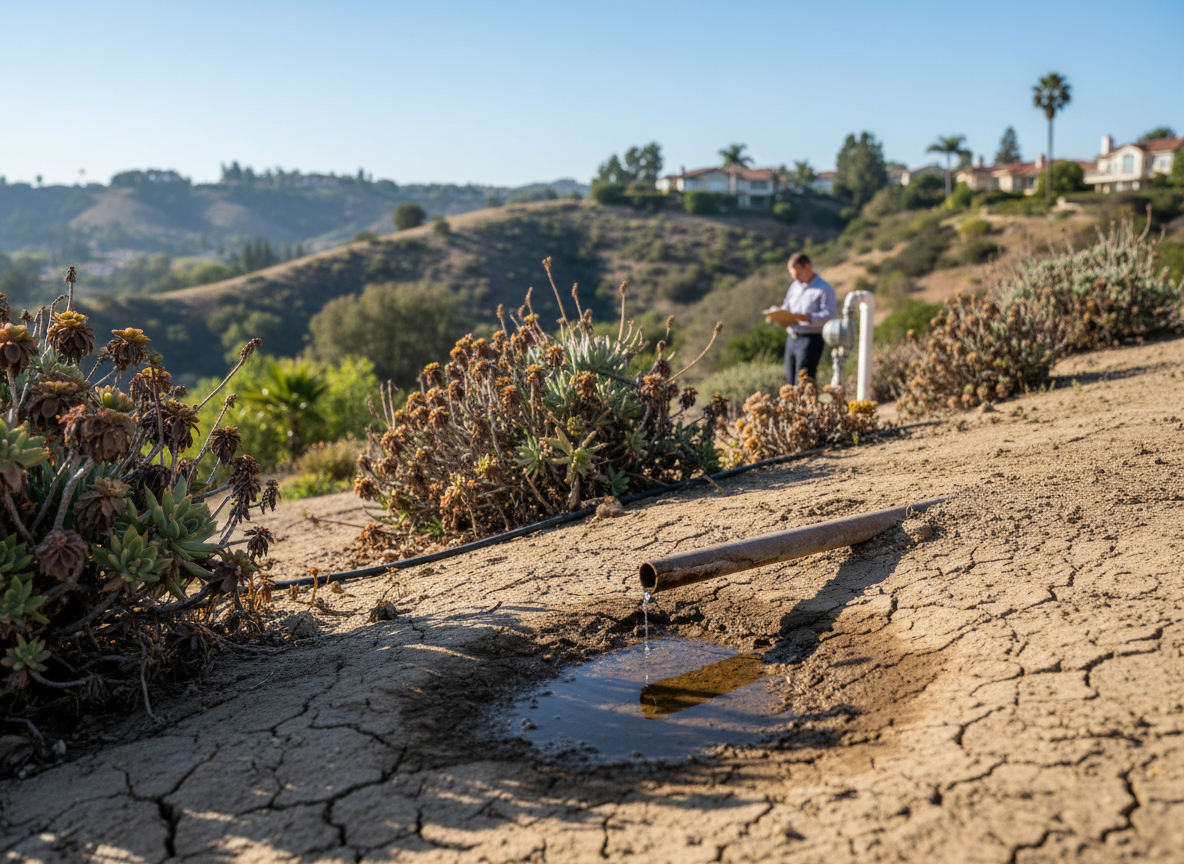
Unexpected rises in water bills across Upland neighborhoods commonly result from hidden leaks that develop in aging supply lines and irrigation systems, particularly where homes predate modern materials and sit on shifting foothill soils.
Aging Pipes in Downtown Upland and College Heights
Many residences in Downtown Upland near the Historic Downtown Plaza and around College Heights were built between the 1950s and 1970s with galvanized or early copper lines that corrode over time. Soil movement along the base of the San Gabriel Mountains stresses joints, allowing small pinhole leaks to form without visible surface water. These leaks often run for weeks before detection because the Mediterranean climate keeps surface soil dry most of the year, masking moisture until bills climb. Homeowners in these blocks frequently notice the change after a mild winter when ground contraction widens existing cracks. Checking meter readings at the curb before and after shutting off all fixtures can confirm whether the increase stems from an underground issue rather than usage habits.
Irrigation System Failures During Hot Dry Summers
San Bernardino County summers push daytime highs above 95 degrees for weeks, forcing automatic sprinklers to run longer cycles on lawns and medians along Foothill Boulevard. Over time, buried PVC lines crack from heat expansion or root intrusion from mature trees common in San Antonio Heights. A single broken lateral can add hundreds of gallons daily without producing puddles on the surface. The same dry conditions that increase watering demand also hide the evidence until the next bill arrives. Regular visual checks of valve boxes and comparison of usage against the same month last year help isolate the problem before it compounds.
Slab Leaks Triggered by Winter Rains and Soil Shifts
Mild winters still bring enough rain to saturate clay-heavy soils beneath homes in Rancho Cucamonga-adjacent pockets of Upland. When the ground expands and contracts, slab foundations experience stress that can separate soldered copper joints under the concrete. These leaks stay contained until pressure drops or the bill reflects continuous flow. Because the terrain slopes gently toward Memorial Park and Upland City Hall, drainage patterns can direct extra moisture toward foundations in lower-lying blocks. Early signs include warm spots on tile floors or unexplained dampness along baseboards, prompting further investigation rather than waiting for the next statement.
Readers noticing a sudden jump can start by reviewing the How to Inspect Your Upland Irrigation System for Leaks guide, then move to professional leak detection if meter tests point to an internal line. Similar patterns after wet periods appear in the article on Signs of Slab Leaks After Winter Rains in Upland Homes. When repairs are needed, targeted leak repair restores normal usage without unnecessary excavation in established neighborhoods.